


.JPG)
.JPG)
.JPG)


Dear all,
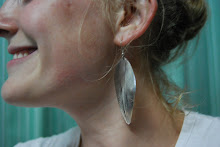
The above photo gallery goes like this: Village Spirit Man and grandson, Dorothy's ruby slippers in the hills of Northern Thailand, 85 year old traditional Lahu midwife, Three photographs of watercolor paintings from a book I bought depicting the illegal refuge seeking journey of the Karen people escaping Burma, A small girl crossing the road in a "floating village" in Cambodia, Myself with some new friends (one 5 months pregnant with the first of probably 7 children she said), and a somber face of Angkor Wot.Since last posting I have been in a bit of a whirlwind of tragedy.
It all began very sweetly with a farewell to Forest, and then the entire group ventured off on our "educational trek." To the surrounding hills of Chiang Mai to spend some time with the hill tribe communities in northern Thailand. We were received with incredible hospitality in the home of the spirit man from the Lahu tribe. You can see him photographed wearing his toddler grandson on his back. We had a beautiful time even though I couldn't stop thinking about the difference between Thailand's Native communitites and North America's as far as brutality, oppression, and genocide. This kind of cultural observation tourism rightfully would never happen in the States--leaving me rather uncomfortable in this setting. Then, I returned Chiang Mai to devastating news from home.
With so little time to comprehend it all, I had to leave almost immediately for our site visit to the border town of Mae Sot. Kimberlee and I were conducting our research into the healthcare system disparities facing displaced persons escaping political turmoil and persecution in Burma. The currupt military Junta has been striving for massive ethnic cleansing and genocide since the 60s.
We visited a grass roots healthcare clinic that was started by a physician from Burma who escaped in order to help others in their plight for refuge. We also were invited to visit the medical director of the nearby refugee camp. Although we had previously attempted to gain official government documentation in order to enter the camp and were in constant contact with the Ministry of Interior, time was not on our side. We thought it was a lost cause. When we met with a French NGO working with the camp (AMI) we were told that it would be possible--if we were willing to follow specific instructions. Up for the challenge we were told to hop on a pick up truck heading to the next town (7 hours from Mae Sot), and to tell anyone who asks, that's where we were heading. We were to pass a police check point, followed by an army check point (if we passed another army check point we missed it). We would start to see a fence, sometimes bamboo, sometimes barbed wire. Wait to get off the truck until you see the end of the 4 km fenced off camp. Walk around until you see a hole or bent part of the fence and just walk through. Yikes!
Well we did so, but not before witnessing two women and their small toddlers get plucked off the truck at the army point because they didn't have identification. We were told that sometimes these patrollings result in imprisonment, and sometimes people are made to clean the army barracks and then are allowed to continue on. This was difficult for us to observe, women attempting to bring bags of rice and fresh vegetables to the camp for their families and roughly ordered off the vehicle by the same officers who smiled at the two of us, like this was a perfectly normal thing a tourist like us would see.
Inside the camp we wandered through slippery muddy narrow walk ways on precarious hills in the two feet alotted between some homes. Homes were bamboo thatch, but poorly-made, cramped and populated. We started asking for "hospital?" and a Karen woman called Rebecca left her cooking to walk us there. We met the medical director of the camp's main hospital and interviewed him for our project and received a tour of the stark concrete and tent structure, housing patients with Tb, cholera, psychosis, and run-of-the-mill myriad other illnesses including an entire unit dedicated to diarrhea. Apparently there was also an avian influenzae outbreak at the next camp north. We were incredibly moved by the dedication, determination and optimism of this man and the plight of his community; displaced, illegal, without access to sustainable resources and living in despair, many for nearly 20 years now. When we asked him what were his un-met needs, he told us they could really use stretchers to collect the patients.
I could go on forever about this single experience; one of the most profound moments of my life.
Back in Chiang Mai I presented another project on schizophrenia and then turned right around again to head to Cambodia for the extended Thanksgiving holiday. It wasn't until we'd arrived by train to Bangkok that we learned there had been a bomb at the airport. The anti-government protestors, who have been working hard at gaining some justice in their corrupt society for over 6 months, staged what was to be a very difficult and terrifying finale to the politic unrest here in Thailand. [I could go on and on, but let me get back to Cambodia.]
We travelled by land across the border into the far more corrupt, Communist government of Cambodia. We made it to Siem Reap, home of the ancient Buddhist ruins of Angkor Wat. We spent our few days surrounded by the beauty of the temples and the incredible humor and laughter of the Cambodians (all of whom are our dear friends now) while at the same time we took in all we could about the horrifying recent history of Pol Pot and the tortuous, insane massacres of nearly a 1/3 of the population by the Khmer Rouge.
Somehow we made it back to Chiang Mai (actually via a 15-hour freezing open air train, I'm just trying to block that out of my memory) in time to give our final culminating project on the story of the Burmese Refugees. Other group projects included child sex traffiking, methamphetamine abuse, and HIV/AIDS. Happy World AIDS day December 1st.
Now it is all over, even annoyed travellers can get to their beach getaway again. These are my final hours in my sweet Chiang Mai, tomorrow I make my way to find Dad. He has somehow also made it to Thailand afterall and together we take off to greater Southeast Asia until sometime around the holidays.
I'm sure I will let you know all about it.
Ps: At least I've plowed through some "uplifting" reading material lately: A Thousand Splendid Suns (rape, war and oppression in Afghanistan), A Child Called It (one of the worst ever recorded cases of child abuse), First, They Killed My Father (Genocide in the Khmer Rouge) and next up: A Long Way Gone (Child soldiers in war-stricken Africa), oh and Sophie's Choice.
***
My heart goes out to Nick Belles and his family & friends
To the people of Thailand right now as they hope/fight for justice, unity and peace
To the situation in Burma, and may refugees rights be formally recognized in Thailand
To the survivors of the Cambodian Khmer Rouge, may you continue smiling and living fully
***
In memory of Leslie Green


.JPG)
.JPG)
.JPG)


.JPG)